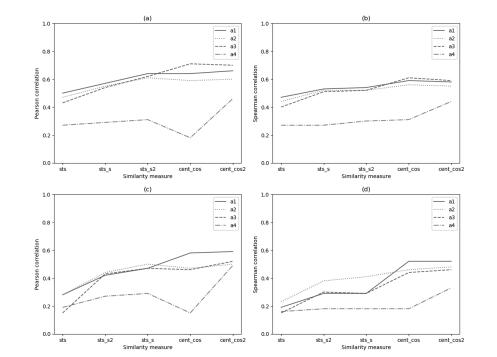
Measuring the semantic similarity of texts has a vital role in various tasks from the field of natural language processing. In this paper, we describe a set of experiments we carried out to evaluate and compare the performance of different approaches for measuring the semantic similarity of short texts. We perform a comparison of four […]
Laboratory for Natural Speech and Language processing
Survey of Neural Text Representation Models
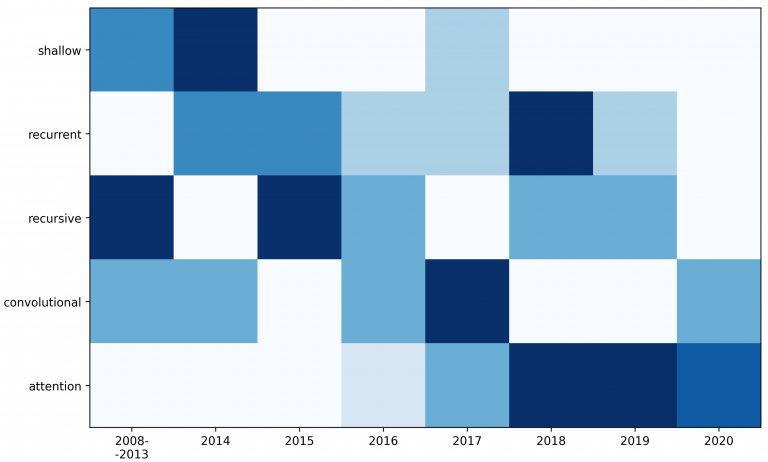
In natural language processing, text needs to be transformed into a machine-readable representation before any processing. The quality of further natural language processing tasks greatly depends on the quality of those representations. In this survey, we systematize and analyze 50 neural models from the last decade. The models described are grouped by the architecture of […]
Multilayer Framework for the Information Spreading Characterization in Social Media during the COVID-19 Crisis (InfoCoV)

Communication through social media has been gaining importance in responses to major crises, such as COVID-19. In emergency situations, there is an urgent need to rely on trustworthy information. On the other side, we are all witnessing a huge amount of misinformation (fake news, conspiracy theories) also spreading on social media, especially during a crisis. […]
Corpus-Based Paraphrase Detection Experiments and Review
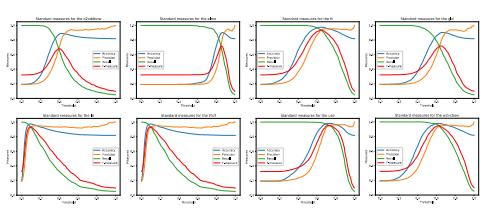
Paraphrase detection is important for a number of applications, including plagiarism detection, authorship attribution, question answering, text summarization, text mining in general, etc. In this paper, we give a performance overview of various types of corpus-based models, especially deep learning (DL) models, with the task of paraphrase detection. We report the results of eight models […]
H2020 MESOC
MESOC is a Research and Innovation Action designed to propose, test and validate an innovative and original approach to measuring the societal value and impacts of culture and cultural policies and practices, related to three crossover themes of the new European Agenda for Culture: 1) Health and Wellbeing, 2) Urban and Territorial Renovation and 3) […]
Structural Analysis of Factual, Conceptual, Procedural, and Metacognitive Knowledge in a Multidimensional Knowledge Network
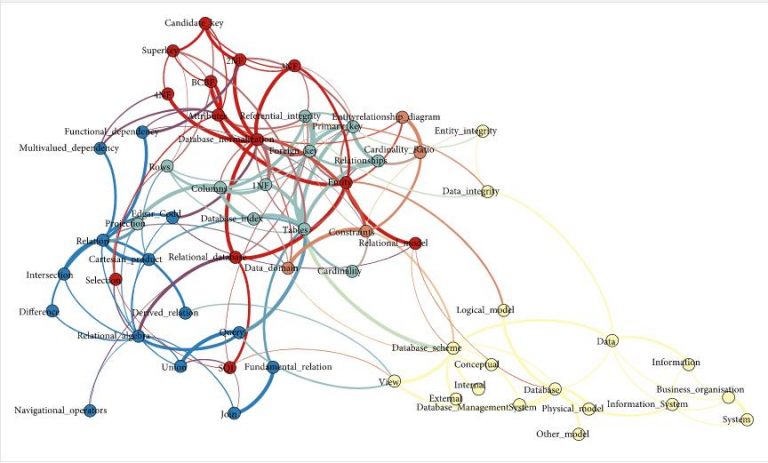
Discovering the most suitable network structure of the learning domain represents one of the main challenges of knowledge delivery and acquisition. We propose a multidimensional knowledge network (MKN) consisting of three components: multilayer network and its two projections. Each network layer constitutes factual, conceptual, procedural, or metacognitive knowledge within the domain of databases as a […]
Netokracija on WiDS 2020
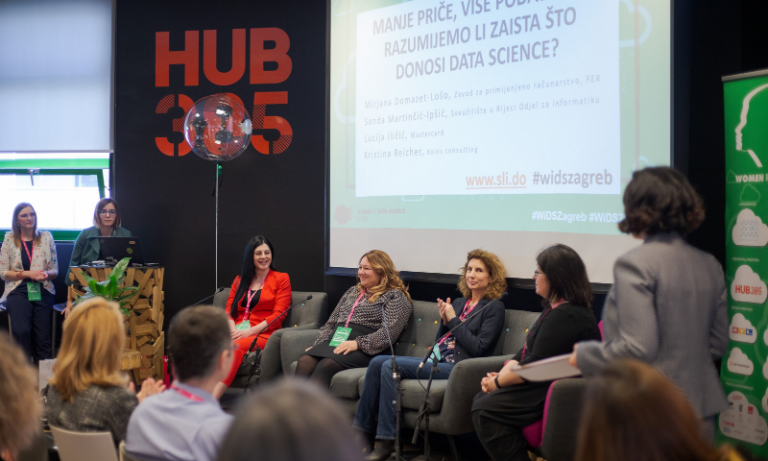
Netokracija on the participation of AIRI members Sanda Martinčić-Ipšić and Marina Ivašić Kos in Women in Data Science 2020 conference in Zagreb.
WiDS Conference 2020

Sanda Martinčić-Ipšić participated in the round table on past, present and future of data science at Women in Data Science Conference 2020 in Zagreb from 04-05.03.2020.
AIRI Researchers @ HTV

Ana Meštrović participated in the HTV show “Kod nas doma”. The topic was dedicated to the collaboration between AIRI researchers and OmoLab in the development of the mobile application for dyslexia.
AIRI scientists interview @ Novi List
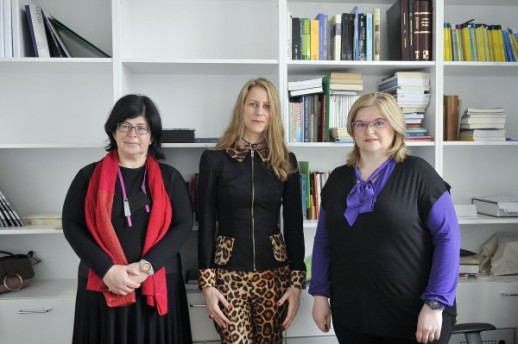
AIRI scientists reveal in interview for Novi list how their paper on Croatian syllabification helped in creating OmoReader application that allows people with dyslexia to read (pdf), 26.12.2019. A. Meštrović, M Matešić and S. Martinčić-Ipšić received “1st Technology Transfer” award, by University of Rijeka Foundation and company Alarm automatika, for the SyllAssist work on the algorithm for Croatian […]