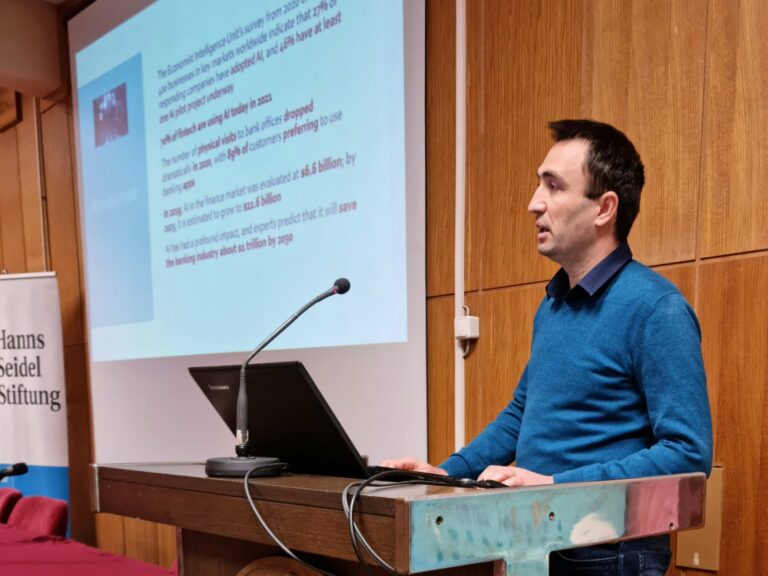
Assoc. Prof. Dr. Sc. Jonatan Lerga held a talk on “How is AI Changing Financial Services?” at the conference “Digital Innovation and Technology for People” held in Opatija on the 9th of December 2021.
Laboratory for Information Processing and Pattern Recognition
Multivariate Decomposition of Acoustic Signals in Dispersive Channels
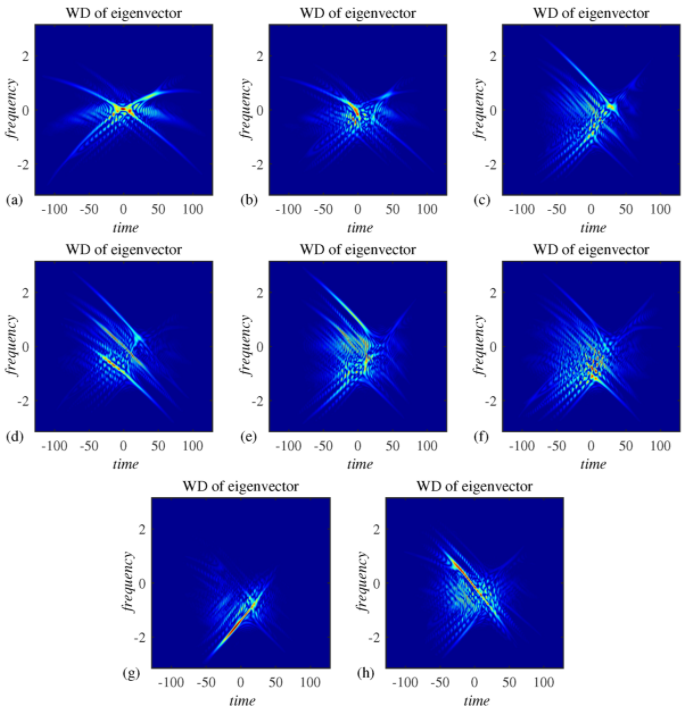
We present a signal decomposition procedure, which separates modes into individual components while preserving their integrity, in effort to tackle the challenges related to the characterization of modes in an acoustic dispersive environment. With this approach, each mode can be analyzed and processed individually, which carries opportunities for new insights into their characterization possibilities. The […]
From Time–Frequency to Vertex–Frequency and Back
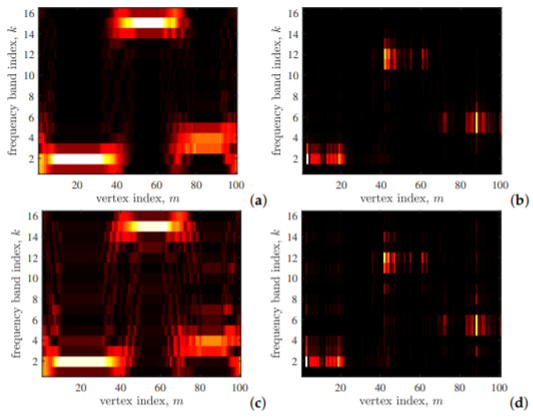
The paper presents an analysis and overview of vertex–frequency analysis, an emerging area in graph signal processing. A strong formal link of this area to classical time–frequency analysis is provided. Vertex–frequency localization-based approaches to analyzing signals on the graph emerged as a response to challenges of analysis of big data on irregular domains. Graph signals […]
ABsistemDCiCloud
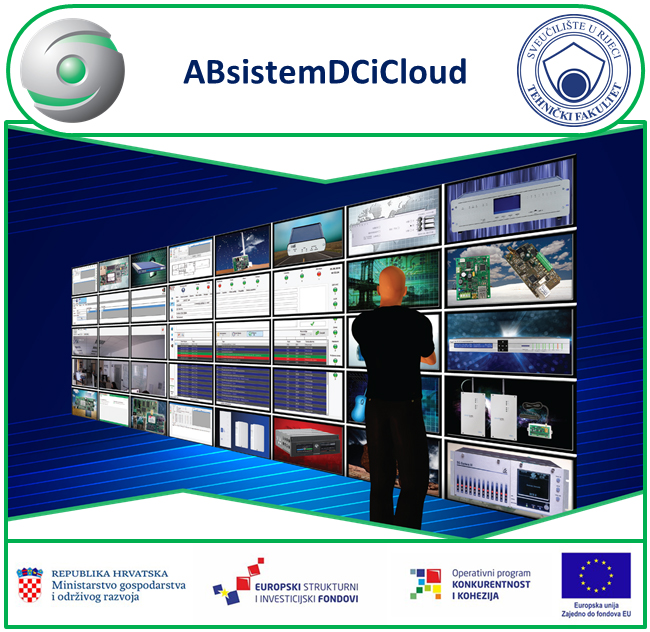
Kratki opis projekta Alarm automatika je u suradnji s Tehničkim fakultetom u Rijeci kroz istraživačko razvojne aktivnosti u području ekologije i sigurnosti osmislila proizvod koji je u isto vrijeme namijenjen zaštiti domova, poslovnih prostora te ostalih objekata i povećanju energetske učinkovitosti. ABsistemDCiCloud predstavlja inovaciju na tržištu koja se temelji na razvijenom softveru, a koja će […]
Particle-Swarm-Optimization-Enhanced Radial-Basis- Function-Kernel-Based Adaptive Filtering Applied to Maritime Data
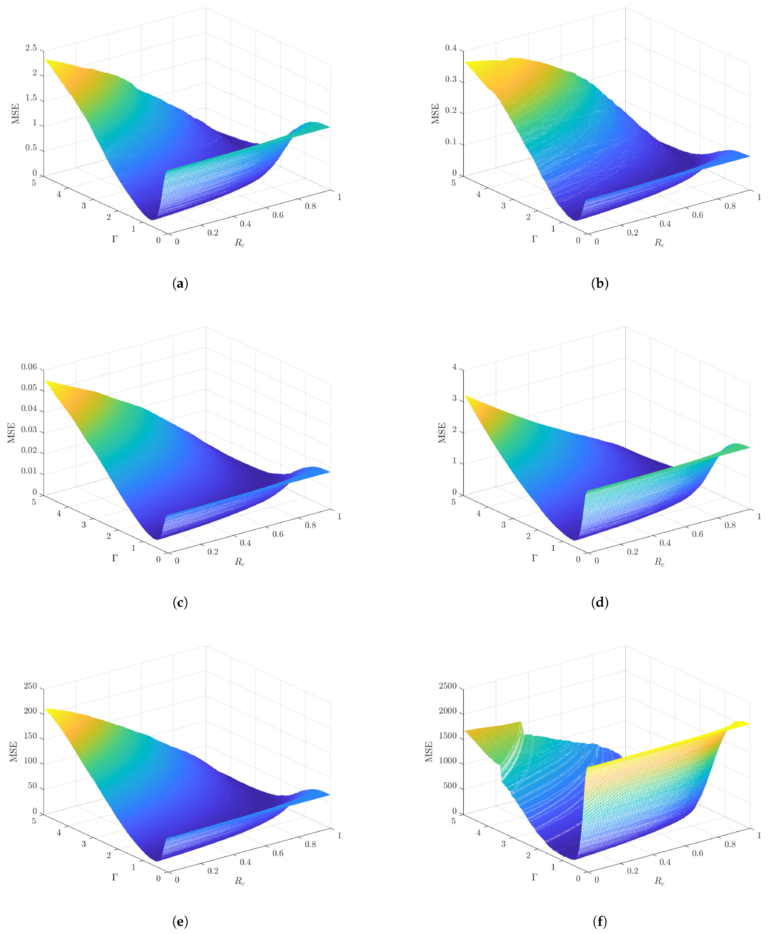
The real-life signals captured by different measurement systems (such as modern maritime transport characterized by challenging and varying operating conditions) are often subject to various types of noise and other external factors in the data collection and transmission processes. Therefore, the filtering algorithms are required to reduce the noise level in measured signals, thus enabling […]
RANSAC-Based Signal Denoising Using Compressive Sensing
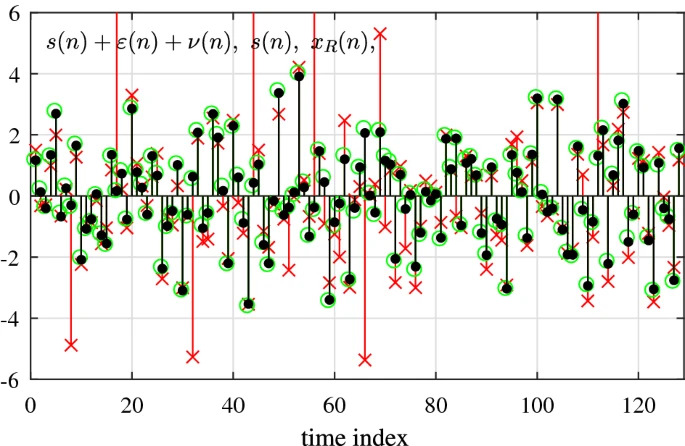
In this paper, we present an approach to the reconstruction of signals exhibiting sparsity in a transformation domain, having some heavily disturbed samples. This sparsity-driven signal recovery exploits a carefully suited random sampling consensus (RANSAC) methodology for the selection of a subset of inlier samples. To this aim, two fundamental properties are used: A signal […]
Rule-Based EEG Classifier Utilizing Local Entropy of Time–Frequency Distributions
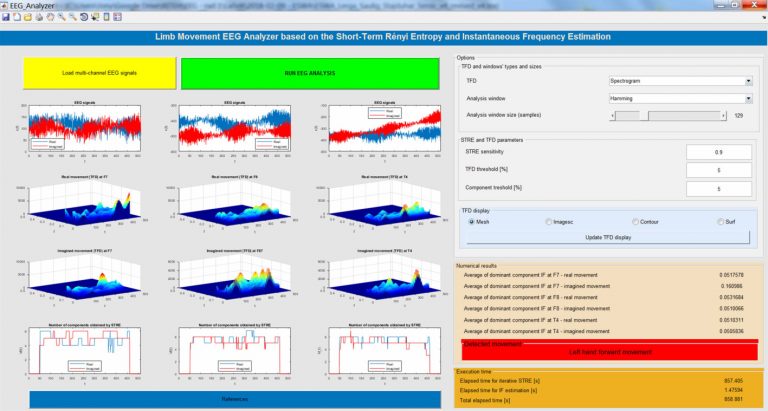
Electroencephalogram (EEG) signals are known to contain signatures of stimuli that induce brain activities. However, detecting these signatures to classify captured EEG waveforms is one of the most challenging tasks of EEG analysis. This paper proposes a novel time–frequency-based method for EEG analysis and characterization implemented in a computer-aided decision-support system that can be used […]
Talk on conference “Exploring Digital Legal Landscapes”
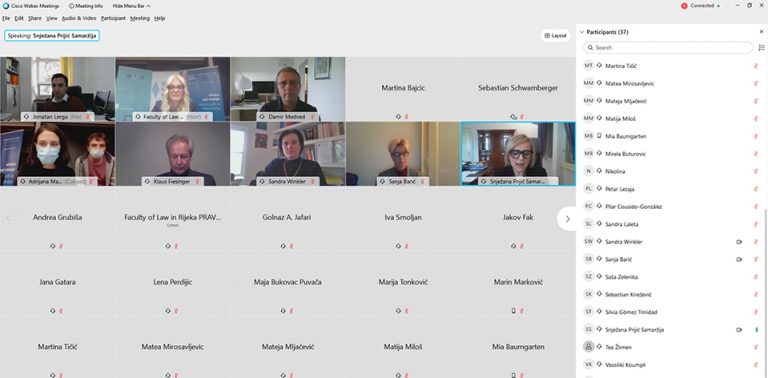
Jonatan Lerga held a talk at the conference “Exploring Digital Legal Landscapes” on 11th of December, 2020 on “Labor Market Trends Leading to Establishing the Center for AI and Cybersecurity in Rijeka”.
Gravitational-Wave Burst Signals Denoising Based on the Adaptive Modification of Intersection of Confidence Intervals Rule
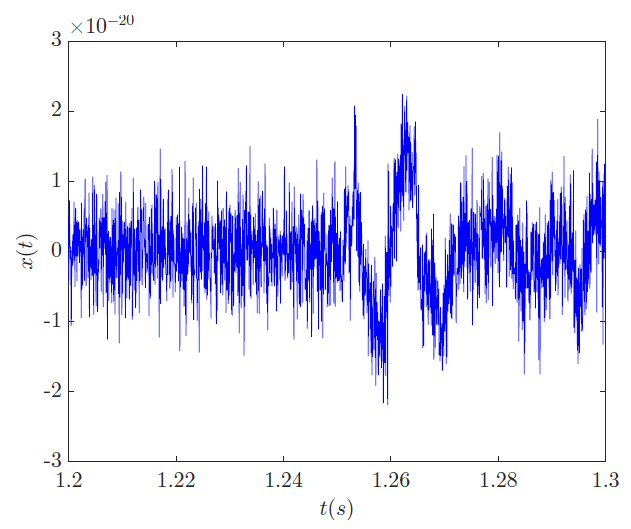
Gravitational-wave data (discovered first in 2015 by the Advanced LIGO interferometers and awarded by the Nobel prize in 2017) is characterized by non-Gaussian and non- stationary noise. An ever- increasing amount of the acquired data requires the development of efficient denoising algorithms that will enable the detection of gravitational- wave events embedded in low signal-to-noise-ratio […]
Estimating River Discharges in Highly Stratified Estuaries
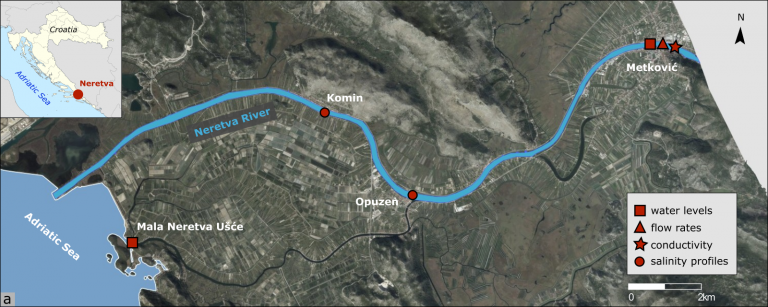
Estuaries are transitional areas between river and marine environments. Understanding the estuarine dynamics is important for various water management issues, such as predicting floods and droughts, assessing impacts of sea level rise, planning freshwater intake for irrigation, and managing sediment transport. One of the key requirements for understanding and predicting the estuarine dynamics is to […]