
The aim and main objectives of the NAHV The project’s main goal is the creation of a hydrogen-based economic, social and industrial ecosystem based on the capacity of the quadruple helix actors. This will drive economic growth, generating new job opportunities within the framework of both the green and digital transitions and, by creating the conditions […]
Laboratory for Information Processing and Pattern Recognition
Enhancing Biophysical Muscle Fatigue Model in the Dynamic Context of Soccer
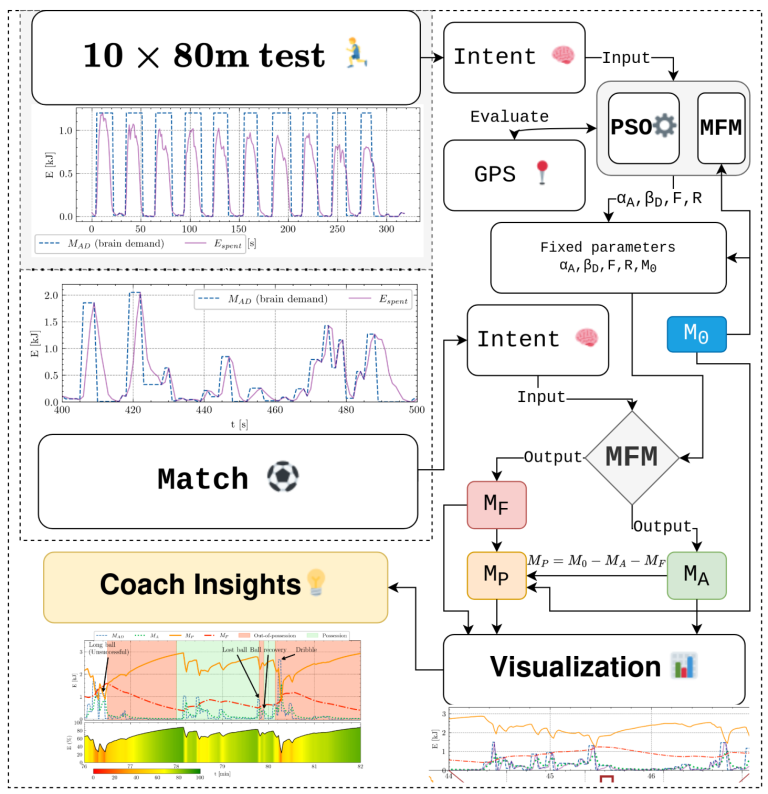
In the field of muscle fatigue models (MFMs), the prior research has demonstrated success in fitting data in specific contexts, but it falls short in addressing the diverse efforts and rapid changes in exertion typical of soccer matches. This study builds upon the existing model, aiming to enhance its applicability and robustness to dynamic demand […]
Regression-Based Machine Learning Approaches for Estimating Discharge from Water Levels in Microtidal Rivers
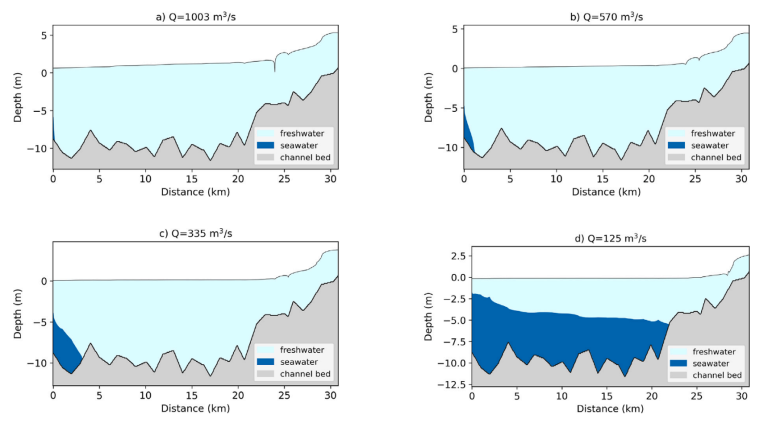
The challenges of managing water resources in tidal rivers, exacerbated by climate change and anthropogenic impacts, require innovative approaches for accurate estimation of hydrological parameters. In tidal rivers and estuaries, water levels depend primarily on river discharge and tidal dynamics. Microtidal estuaries are particularly complex due to the strong stratification and two-layer structure, which also […]
Ana Vranković Lacković defended her doctoral thesis
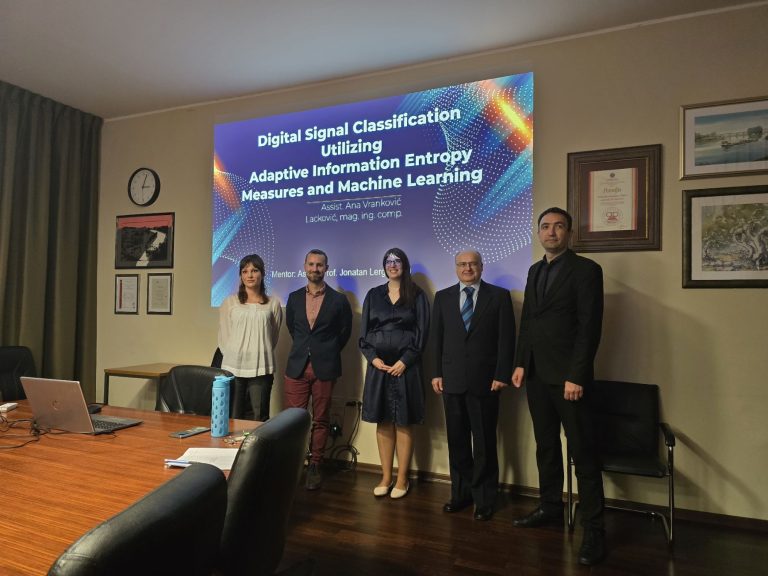
We are happy to announce that on 16th of May, 2024. Ana Vranković Lacković has successfully defended her doctoral thesis, titled “Digital Signal Classification Utilizing Adaptive Information Entropy Measures and Machine Learning,” at the Faculty of Engineering RITEH University of Rijeka.Ana’s thesis is the result of hard work and represents a significant advancement in the […]
Development of computational algorithms based on digital signal processing and artificial intelligence methods with application in modern transport systems

The project is directed toward developing computational algorithms based on advanced digital signal processing techniques and artificial intelligence methods. The research will particularly focus on the computer-aided analysis of non-stationary signals using two-dimensional quadratic time-frequency distributions, where the improvement in time-frequency resolution and robustness to noise will be thoroughly studied. Moreover, adaptive algorithms for non-stationary […]
Method for Automatic Estimation of Instantaneous Frequency and Group Delay in Time–Frequency Distributions with Application in EEG Seizure Signals Analysis
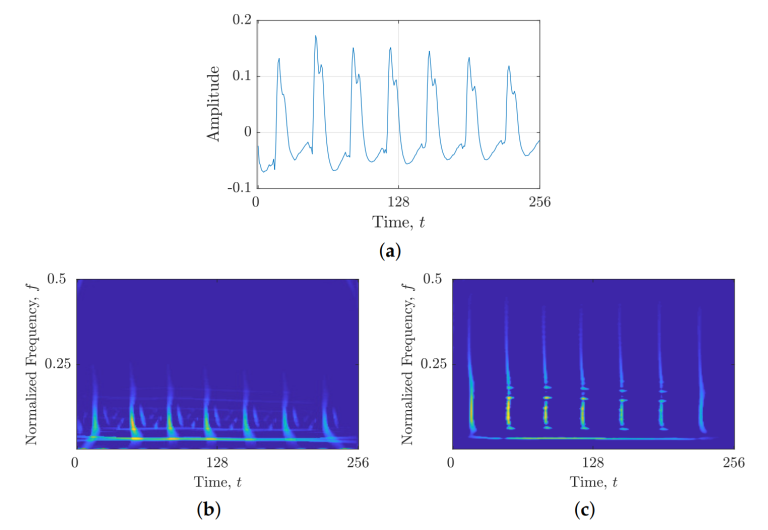
Instantaneous frequency (IF) is commonly used in the analysis of electroencephalogram (EEG) signals to detect oscillatory-type seizures. However, IF cannot be used to analyze seizures that appear as spikes. In this paper, we present a novel method for the automatic estimation of IF and group delay (GD) in order to detect seizures with both spike […]
Sparse Time-Frequency Distribution Reconstruction Using the Adaptive Compressed Sensed Area Optimized with the Multi-Objective Approach
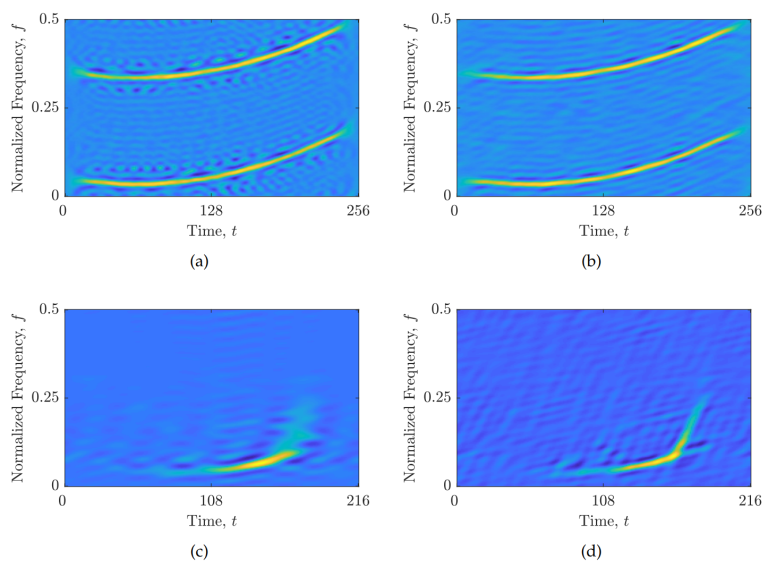
Compressive sensing (CS) of the signal ambiguity function (AF) and enforcing the sparsity constraint on the resulting signal time-frequency distribution (TFD) has been shown to be an efficient method for time-frequency signal processing. This paper proposes a method for adaptive CS-AF area selection, which extracts the magnitude-significant AF samples through a clustering approach using the […]
Block-Adaptive Rényi Entropy-Based Denoising for Non-Stationary Signals
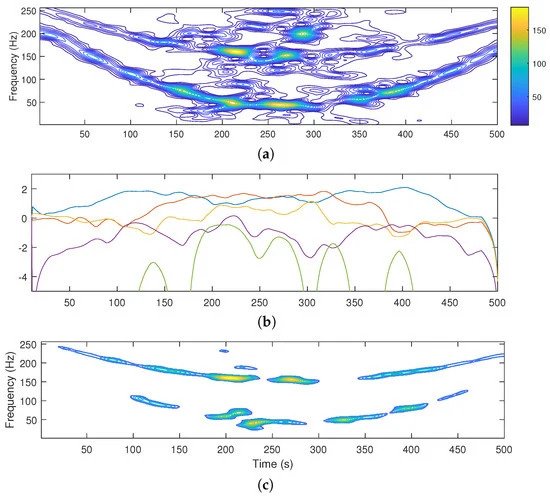
This paper approaches the problem of signal denoising in time-variable noise conditions. Non-stationary noise results in variable degradation of the signal’s useful information content over time. In order to maximize the correct recovery of the useful part of the signal, this paper proposes a denoising method that uses a criterion based on amplitude segmentation and […]