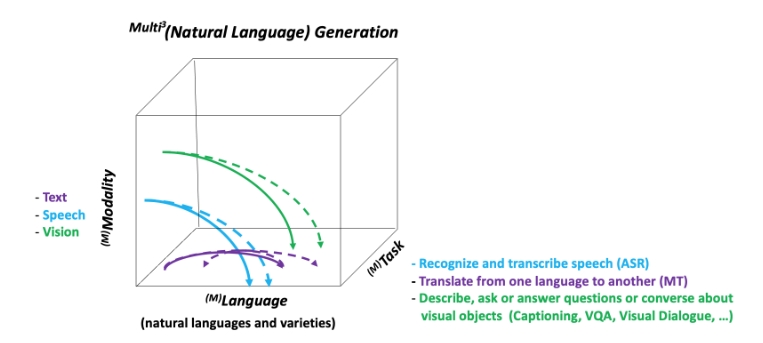
Developing artificial learning systems that can understand and generate natural language has been one of the long-standing goals of artificial intelligence. Recent decades have witnessed an impressive progress on both of these problems, giving rise to a new family of approaches. Especially, the advances in deep learning over the past couple of years have led […]
News
Forecasting Maritime Vessel Trajectories: A Comprehensive Review of Data-Driven Approaches
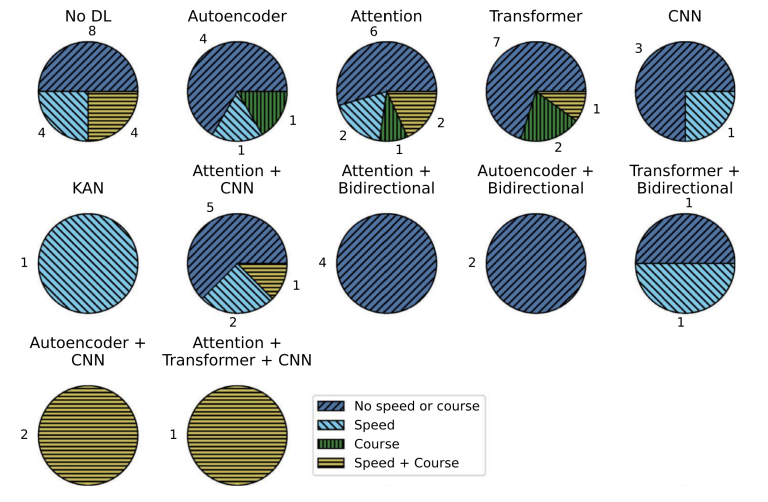
Maritime navigation safety is the basis for global logistics and marine ecosystems. The increasing availability of Automatic Identification System (AIS) data has opened new avenues for forecasting vessel trajectories with higher precision and robustness. This review presents a comprehensive survey of recent data-driven approaches, including probabilistic models, classical statistical methods, and deep learning (DL) architectures. […]
Hybrid Deep Learning Models for Medium-Term Electricity Load Forecasting
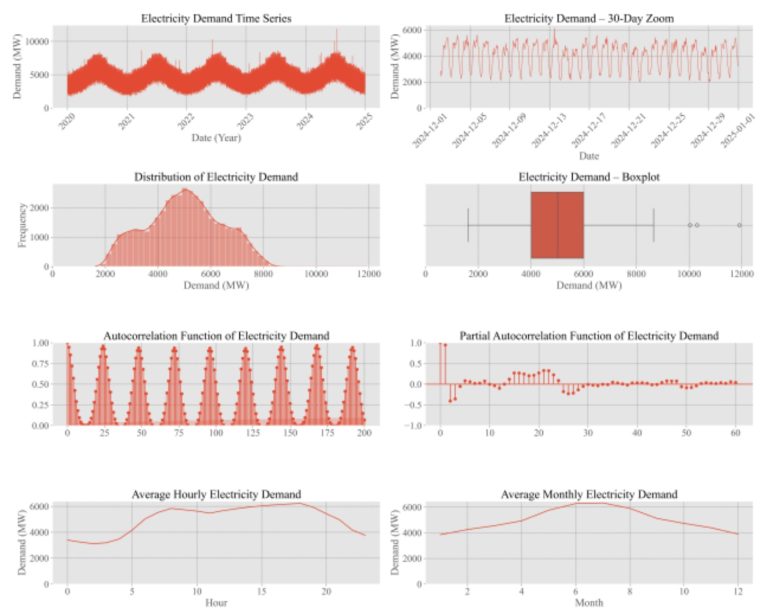
This paper presents a hybrid model for medium- and long-term electricity demand forecasting, developed with the aim of achieving accurate forecasts on horizons ranging from a few weeks to several months. Univariate deep models show a significant drop in performance at higher time horizons and are unable to adequately model long-term nonlinearities and changes in […]
Machine Learning for Ship-Motion-Based Sea-State Estimation
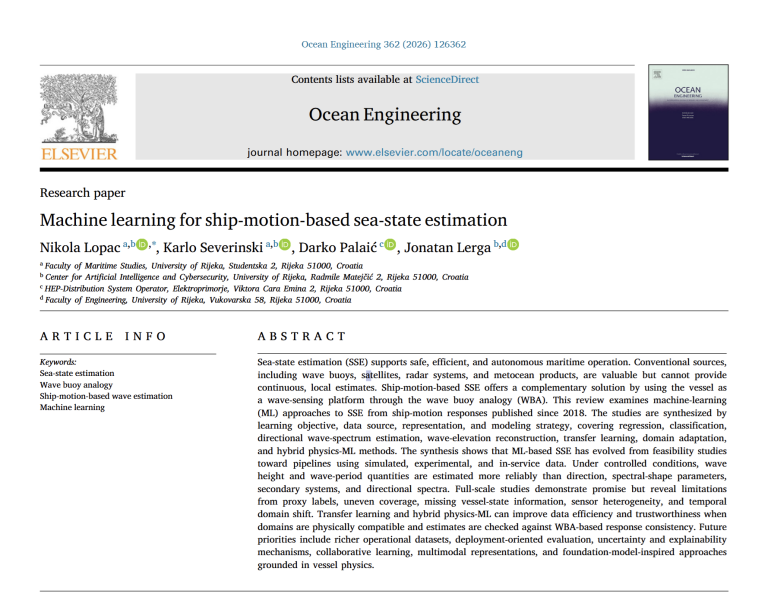
Sea-state estimation (SSE) supports safe, efficient, and autonomous maritime operation. Conventional sources, including wave buoys, satellites, radar systems, and metocean products, are valuable but cannot provide continuous, local estimates. Ship-motion-based SSE offers a complementary solution by using the vessel as a wave-sensing platform through the wave buoy analogy (WBA). This review examines machine-learning (ML) approaches […]
Security and Privacy of Large Language Models: Threat Taxonomy, Ethical Implications, and Governance
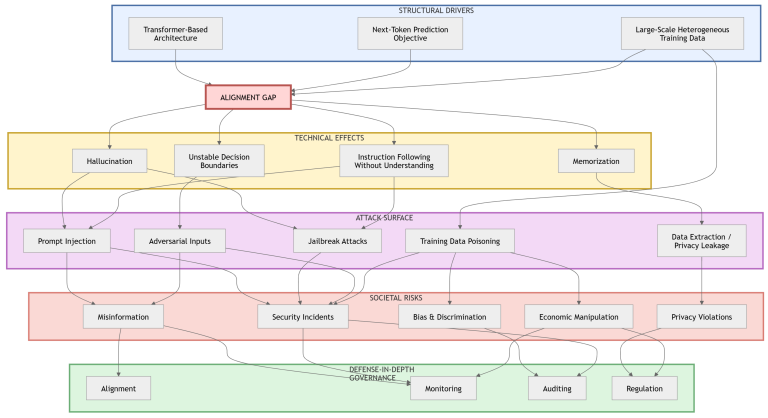
Large Language Models (LLMs) are increasingly deployed across professional and societal domains, introducing security, privacy, and governance challenges beyond traditional software vulnerabilities. Despite extensive research on individual risk categories, a unified lifecycle-oriented perspective connecting architectural properties, adversarial threats, and governance implications remains limited. This review examines security and privacy risks associated with LLMs through a […]
Knowledge Graphs in the Era of Large Language Models (KGELL)
Knowledge Graphs (KGs) have gained attention due to their ability to represent structured and interlinked information. KGs represent knowledge in the form of relations between entities, referred to as facts, typically grounded in formal ontological models. Such machine-readable formats enable AI systems to make decisions using clear and verifiable data. Consequently, KGs have become essential […]
LIVE Quantum – Development of an Integrated AI Platform for Multichannel Personalized Management of User Requests
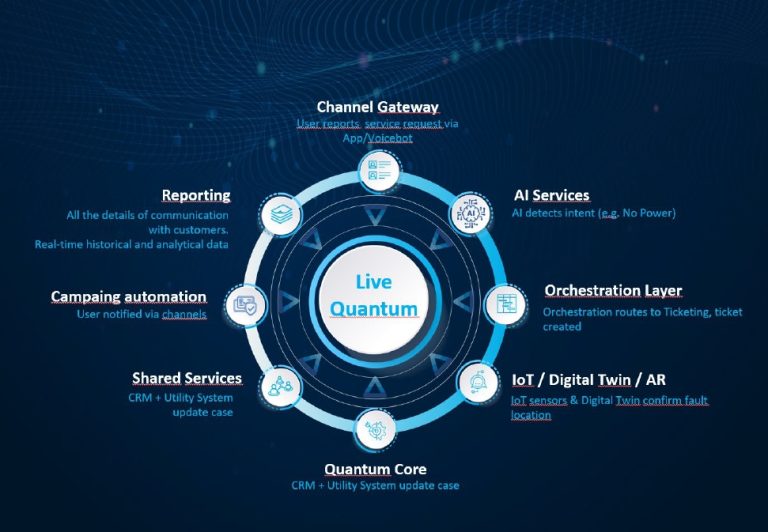
The LIVE Quantum project focuses on the research and development of an advanced, integrated AI-based platform for multichannel, personalized management of user requests, primarily targeting operators of critical infrastructure systems such as energy, water, gas, telecommunications, and utilities. The project combines industrial research and experimental development activities to create a scalable and modular solution that […]
Predicting Anomalous Trajectories Using Machine Learning
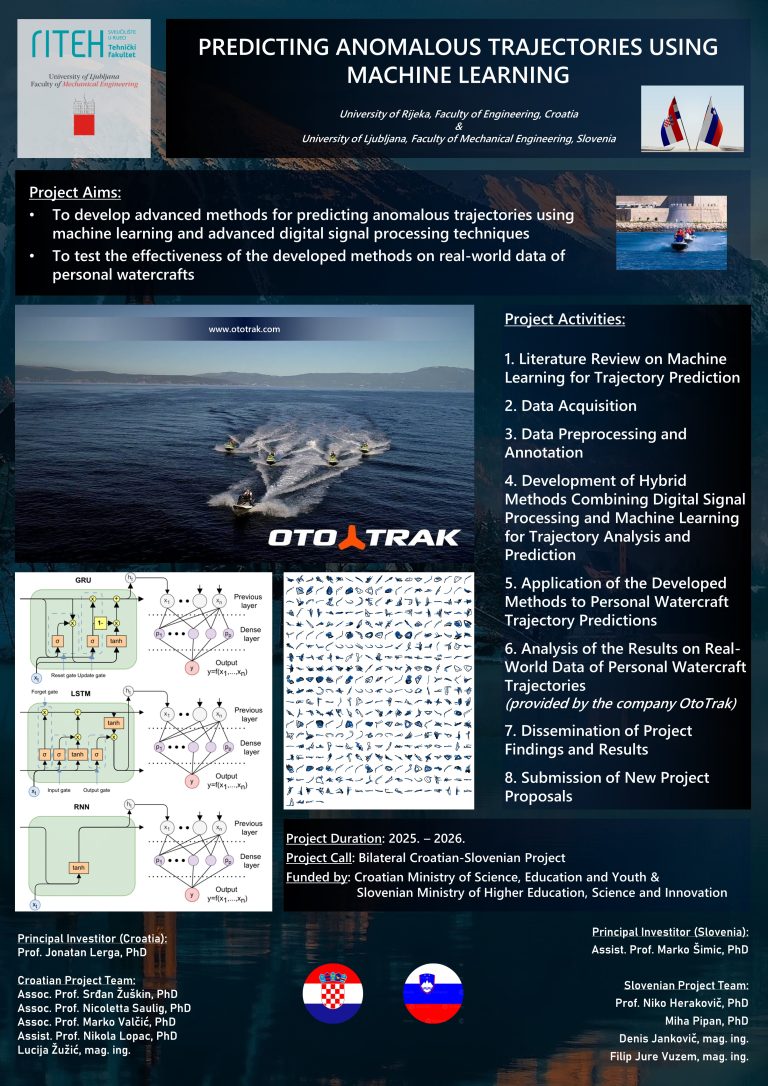
The proposed project focuses on applying machine learning to predict future trajectories, i.e., geographic position, using as input the changes in longitude and latitude, speed, and heading. Trajectories are classified based on inflection points present in the functions representing segments of the trajectories. Since the developed algorithms are intended for real-world data, preprocessing is planned. […]
Adaptive Algorithms for Integrating Compressive Sensing with Deep Learning
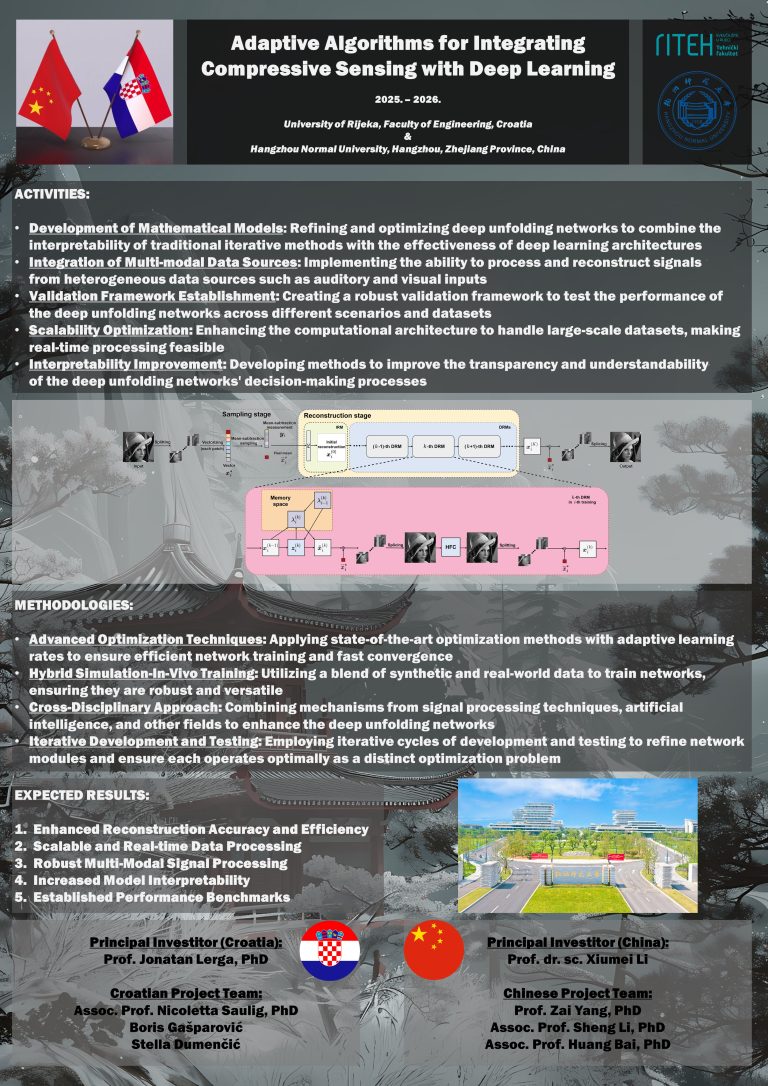
The project aims to improve image compressive sensing (CS) reconstruction by developing deep unfolding networks that combine the interpretability of iterative CS algorithms with the speed of deep learning. Instead of tying each network block to a single iteration, the proposed approach treats each module as an independent optimization problem with its own CS model […]
Deep Learning for Smart Energy Systems Management
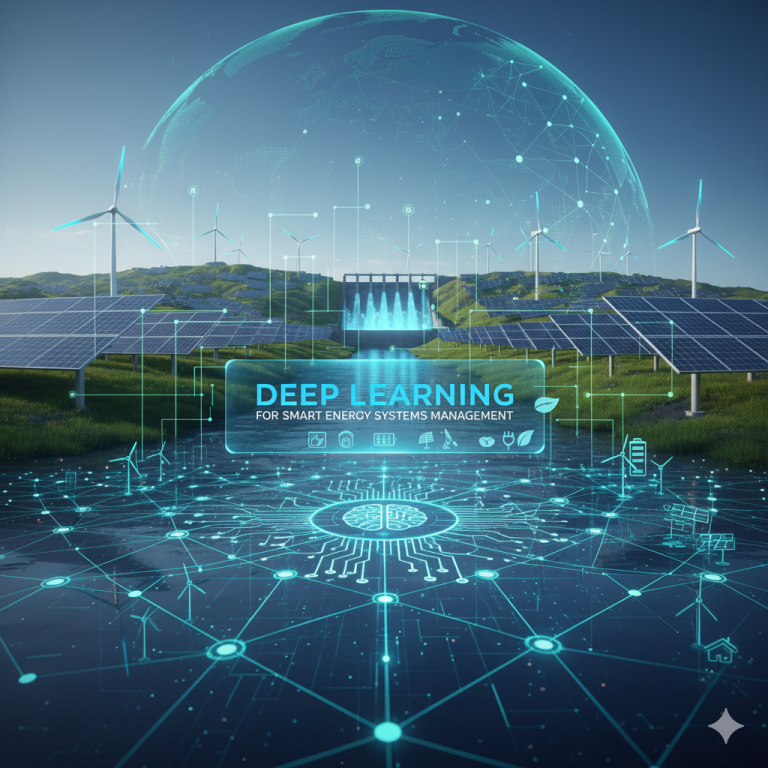
As a key component of modern energy management systems, energy demand forecasting plays a crucial role in efficient resource allocation, grid stability, and the integration of renewables. Traditionally, classical techniques such as ARIMA and SARIMA have been used for energy demand prediction due to their simplicity and interpretability. However, these conventional methods often fail to […]
LIVE Quantum project kick-off meeting

The project kick-off meeting for LIVE Quantum – Development of an integrated AI platform for multichannel, personalized management of customer requests was held on 20 February 2026 in Zagreb. The project is valued at EUR 2,418,416.98 and is implemented under the IRI S3 call – Increasing the development of new products and services arising from […]